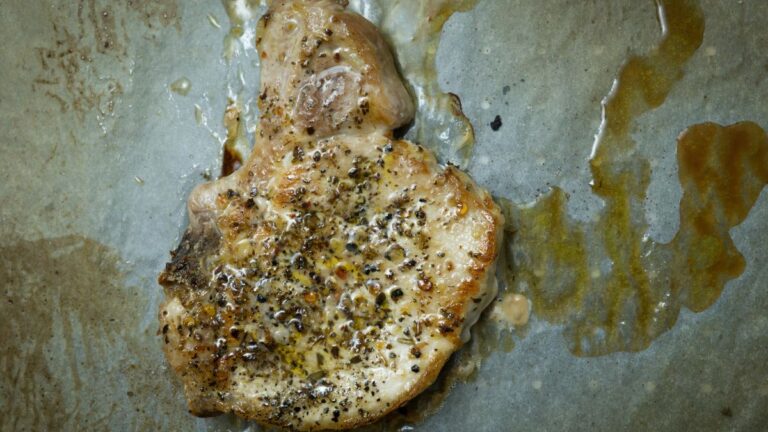

Chuck Meat Soup with “Kidney Rocks”
Quick Answer:
Cut 2.44 lbs of grass-fed, grass-finished chuck meat into small cubes and about 0.03 lb of beef kidney into small “rock” pieces. Dry-cook the chuck in a stainless-steel or cast-iron pan on low heat (about 4 on a 0–8 dial) for around 45 minutes so it releases its own juices. Then add the kidney pieces, about 8 oz of water (more if you want extra broth), and 1 teaspoon of tallow. Simmer on low for another ~35 minutes, until the meat is tender and the broth is rich. Serve hot in a bowl and, if you like, top with two fresh egg yolks. Perfect for a rainy evening or winter night.

Ingredients
Protein & fat
- 2.44 lbs grass-fed, grass-finished chuck meat, cut into small cubes
- 0.03 lb beef kidney (grass-fed, grass-finished), cut into small “rocks”
- 1 teaspoon beef tallow
- 2 egg yolks from pasture-raised hens (optional, for topping)
Liquid
- ~8 oz (1 cup) water to start
- Add more if you’d like a brothier soup
I don’t cook with salt in this recipe. I prefer to drink my salt separately and let the natural flavor of the meat and fat come through. If you use salt in your cooking, you can add a little during simmering or as a finishing sprinkle in your bowl.
Equipment
- Stainless-steel or cast-iron pan with a lid
- Wooden spatula
- Cutting board and sharp knife
- Soup bowls for serving
Instructions
- Prep the meats
- Cut the chuck meat into small cubes so it cooks evenly and fits easily on a spoon.
- Cut the beef kidney along its natural partitions into small “rock-like” pieces.
- Dry-cook the chuck
- Place the cubed chuck meat into your stainless-steel or cast-iron pan.
- Do not add water yet.
- Set the stove to low heat (around 4 on a 0–8 dial).
- Cover and allow the chuck to cook in its own fat and juices for about 45–46 minutes, stirring occasionally with a wooden spatula so it doesn’t stick.
- Add kidney, water, and tallow
- After the initial cook, add:
- the kidney pieces,
- about 8 oz (1 cup) of water (or more if you want a thinner soup),
- 1 teaspoon of tallow.
- Stir gently to combine.
- Keep the stove at low heat (around 4), cover, and let everything simmer for another ~35 minutes, until:
- the chuck is tender,
- the kidney is cooked through, and
- the broth tastes rich and comforting.
- After the initial cook, add:
- Check and adjust
- Taste the broth (if you use salt, adjust now).
- If you’d like more liquid, add a bit more water and simmer a few extra minutes.
- Serve & (optionally) top with egg yolks
- Ladle the soup into a hot bowl.
- If desired, gently place 1–2 fresh egg yolks on top of the steaming soup just before serving.
- The heat will lightly veil the yolks while keeping their texture silky and nutrient-dense.
Enjoy slowly… this is a beautiful rainy evening or winter night bowl: simple, grounding, and deeply nourishing.
Related Reading
Mindful Eating and Understanding his practice
Bone Broth for Gut and Immune Health
Optional FAQ
Q: What are “kidney rocks”?
A: “Kidney rocks” is simply my playful name for small chunks of beef kidney. Cutting them into little “rocks” makes them easy to eat and spreads the mineral-rich flavor throughout the soup. If you’re new to organs, you can start with a smaller amount and increase as your body adjusts.
Q: Can I make this without the kidney?
A: Yes. You can absolutely make a version with just chuck meat, tallow, and water and still get a rich, satisfying soup. The kidney adds nose-to-tail nutrients, but it isn’t mandatory for the recipe to work.
Q: Do I have to add the egg yolks?
A: No. The egg yolks are optional. They add extra fat, vitamins, and a luxurious texture. If your body prefers to avoid eggs, simply leave them off and enjoy the soup as-is.
Clinical services are provided within my scope as a licensed clinical psychologist (CA, RI). My Doctor of Integrative Medicine credential is a doctoral degree with board certification by the Board of Integrative Medicine (BOIM) and does not represent a medical/physician license. All educational content is for learning only and is not a substitute for professional medical or psychological care.
About Dr. Nnenna Ndika
Dr. Nnenna Ndika is an integrative, trauma-informed clinical psychologist (CA/RI) and Doctor of Integrative Medicine (BOIM). Her work bridges neuroscience, somatic regulation, and environmental rhythms—simple, minimalist practices that help the body remember safety and the mind regain quiet strength. Silent Medicine is educational only; it does not replace medical or psychological care. Begin with Start Here or explore Mind-Body Healing.